

Removable restorations
Sleep apnea appliances
Mandibular advancement appliances that hold the lower jaw forward, so the upper airway is not free to narrow during sleep.
2 products. Choose one to see the details.
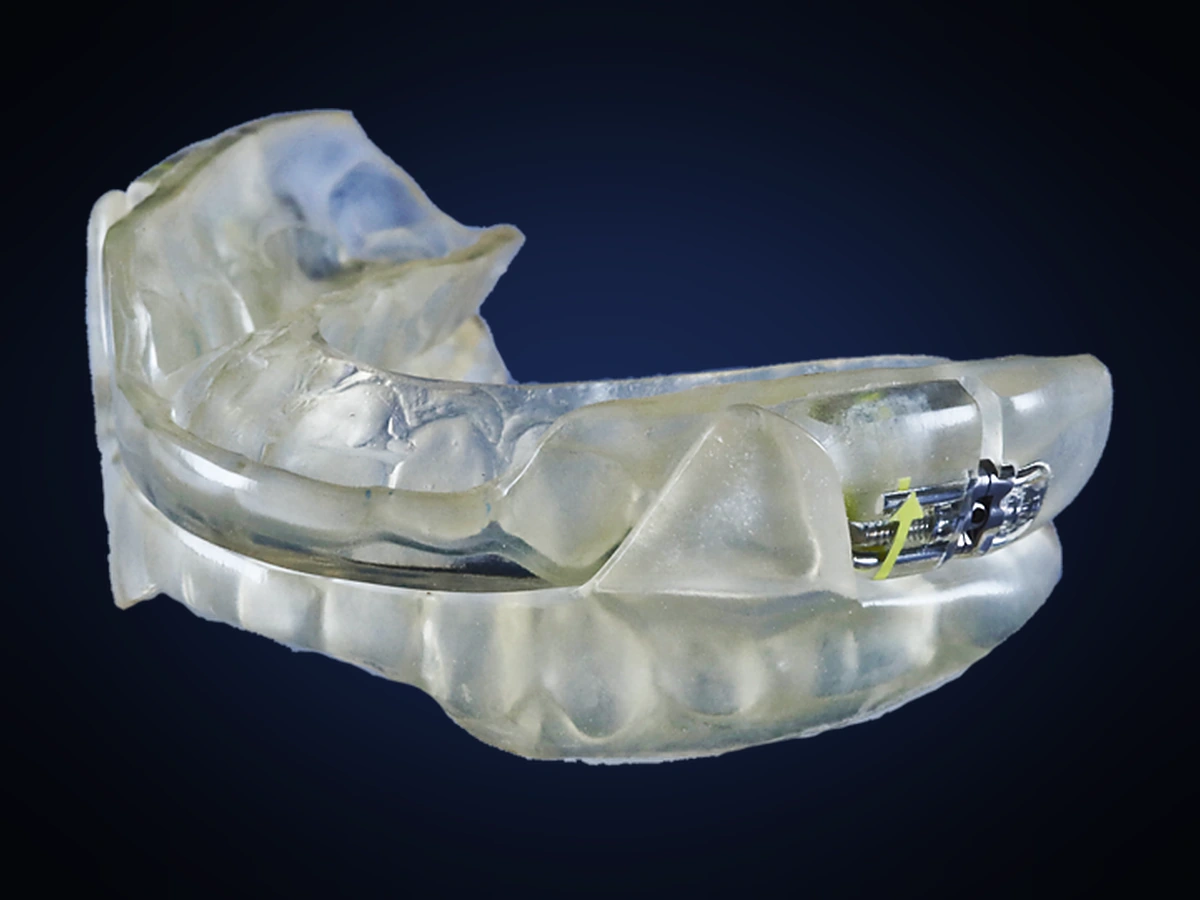
MDent anti-snoring appliance
Separate upper and lower acrylic plates, adjustable up to 5.5 mm.
Best for: Snoring patients the dentist is treating with an adjustable advancement appliance
View product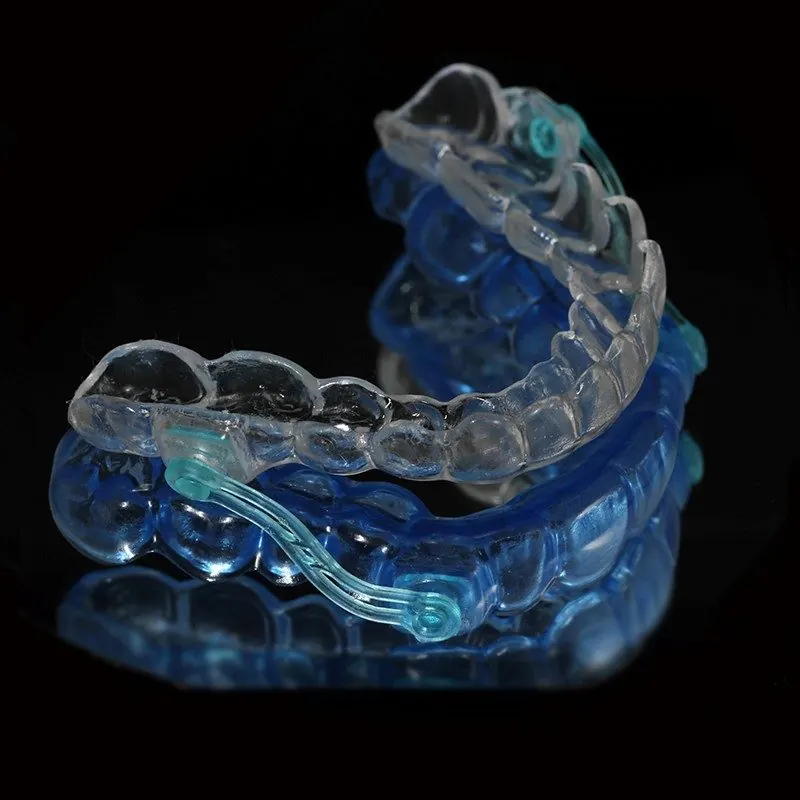
Silensor-sl
A compact two-splint appliance joined by lateral connectors.
Best for: Snoring patients who want the least bulky appliance
View product
Snoring and sleep apnea
Snoring affects up to 40% of people in industrialised countries. As muscle tone drops during sleep the upper airway narrows, the air moving through it speeds up, and the soft tissue around it begins to vibrate. The noise is mechanical, which is why it can be treated mechanically, and dental therapy is one of the options.
Primary, light snoring has no health consequences. Rhonchopathy, the abnormal form, can. Obstructive sleep apnea is a complete blockage of the upper airway, central apnea is a pause in the brain's respiratory reflex, and hypopnea is a fall in airflow of more than 50%. Untreated, apnea causes daytime sleepiness and is associated with systemic disease.
Both appliances we make work the same way: they hold the lower jaw forward so that the airway is not free to collapse, and the dentist decides which one suits the patient and how far the jaw should be advanced.